
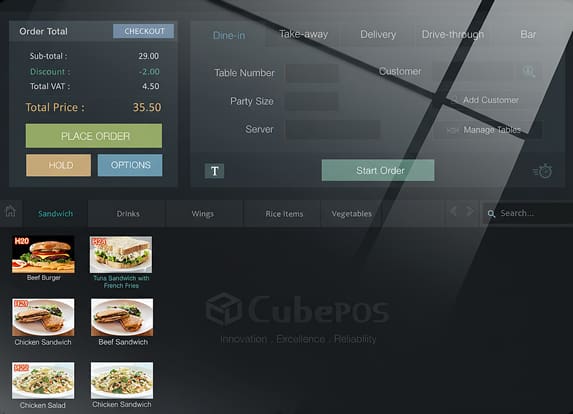
Choosing a restaurant EPOS system in the UK is no longer just about taking payments. Modern restaurants need technology that supports efficient service, accurate reporting, and staff productivity, all while remaining affordable.
One of the most common mistakes restaurant owners make is choosing an EPOS system based on price alone — without understanding what features are actually included.
In this guide, we answer the most common feature-related EPOS questions UK restaurant owners ask online, so you can make an informed decision before investing.
Does EPOS Support Table Management?
Yes — most modern restaurant EPOS systems support table management, but the level of functionality varies.
A good EPOS system should allow you to:
Open, move, and merge tables
Track covers and table status (free, occupied, bill requested)
Split bills by item or guest
Reduce wait times during busy service
For dine-in restaurants, table management is essential for improving turnover and avoiding billing errors. If your EPOS does not support this properly, staff often fall back to paper notes — slowing down service.
Can EPOS Work With Kitchen Display Systems (KDS)?
Modern EPOS systems can work with kitchen display systems (KDS) or kitchen printers.
A kitchen-integrated EPOS should:
Send orders instantly to the kitchen
Clearly separate dine-in, takeaway, and delivery orders
Reduce miscommunication between front-of-house and kitchen staff
Improve preparation times during peak hours
Many UK restaurants are replacing paper tickets with digital kitchen screens to improve accuracy and speed. This feature is especially useful for fast-paced environments such as takeaways and casual dining restaurants.
Can EPOS Track Stock and Ingredients?
Yes, but not all EPOS systems handle stock management equally well.
A good UK EPOS system should help you:
Track stock usage based on sales
Monitor low-stock alerts
Reduce food waste
Understand cost of goods sold (COGS)
While advanced ingredient-level stock tracking may not be essential for every small restaurant, having basic stock visibility is extremely valuable for controlling costs — especially with rising supplier prices in the UK.
Can EPOS Work Offline if the Internet Goes Down?
This is a very common concern among UK restaurant owners — and for good reason.
Some EPOS systems offer offline functionality, meaning:
Orders can still be taken during internet outages
Transactions are stored locally
Data syncs automatically once the connection is restored
While cloud-based EPOS systems rely on internet access, the best platforms are designed to minimise disruption during connectivity issues. This is particularly important for busy service periods where downtime can directly impact revenue.
Can Staff Be Trained Quickly on EPOS?
Ease of use is one of the most important — and most overlooked — EPOS features.
A well-designed EPOS system should:
Be intuitive for new staff
Require minimal training time
Reduce mistakes during busy shifts
Allow role-based access for security
With high staff turnover in the UK hospitality industry, restaurants benefit greatly from EPOS systems that staff can learn in minutes, not days.
Does EPOS Support Card Machines in the UK?
Yes — UK EPOS systems typically support integration with card machines, but compatibility is crucial.
When choosing an EPOS system, check that it:
Works with UK card payment providers
Supports contactless and chip & PIN payments
Handles card and cash payments seamlessly
Complies with UK payment standards
Poor integration between EPOS and card machines can lead to payment mismatches, reconciliation issues, and slower checkouts.
What Features Should UK Restaurants Prioritise?
Rather than paying for unnecessary features, UK restaurant owners should prioritise EPOS systems that offer:
Reliable order processing
Support for dine-in, takeaway, and delivery
Kitchen integration
Simple reporting for business insights
Easy staff onboarding
Modern systems like CubePOS are designed specifically for UK restaurants, focusing on essential features that improve speed and efficiency without unnecessary complexity.
?? Learn more at www.cubepos.co.uk
Final Thoughts
The right EPOS system should support your restaurant’s daily operations — not complicate them.
By understanding what features really matter, UK restaurant owners can avoid overpaying for software that doesn’t fit their business and instead choose a system that scales with their needs.
If you’re comparing EPOS systems in the UK, focus on functionality, ease of use, and long-term value, not just headline pricing.